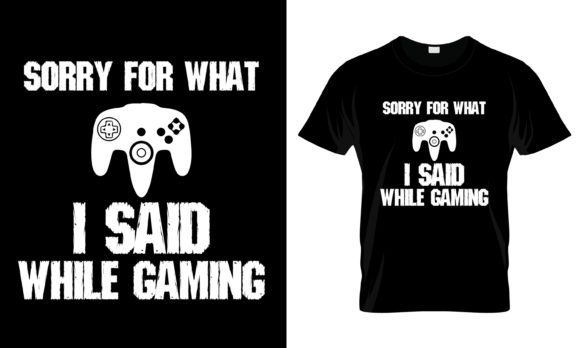
Sorry for What I Said Gaming T-Shirt: Integrating a Design into Your Creative Process
For creators, marketers, and entrepreneurs in the gaming merchandise space, identifying and deploying a compelling t-shirt design is more than a simple product launch. It's a strategic workflow that involves market understanding, asset management, and targeted execution. The Sorry for What I Said Gaming T-Shirt serves as an excellent case study for this process, representing a popular, humor-driven concept that resonates with a broad adult gaming audience. This article explores how such a design fits into a broader creative and commercial workflow, from initial concept validation to final product integration and audience targeting.
Where This Gaming Design Fits in Your Project Flow
The Sorry for What I Said Gaming T-Shirt isn't just a graphic; it's a packaged digital asset. The offering includes an SVG file for vector-based scaling, an EPS file for professional print software compatibility, and a high-resolution PNG file at 4500×5400 pixels for detailed mockups. This trio of files is crucial for different stages of the workflow. The SVG and EPS files are assets you'll use before production, during the design preparation phase with tools like Adobe Illustrator or CorelDRAW, ensuring the artwork is scalable and compatible with various printing techniques. The PNG file, meanwhile, is often used after the design is finalized, serving as a high-quality asset for marketing mockups, website listings, and social media previews.
Integrating this design into your process means recognizing its role at each stage. For a small business owner selling on platforms like Etsy or Shopify, the workflow begins with acquiring the design files. The next step involves using those files with your chosen printing partner's software or your own design tools to set up the product. This is where file compatibility directly impacts efficiency. A seamless transfer of the EPS or SVG file into your print setup software minimizes rework and maintains the design's quality, a key factor in final product consistency.
Preparing for Implementation: Audience and Use Case Alignment
A successful integration hinges on preparation that aligns the asset with your target audience. The described audience for this shirt—adults aged 20–50, including passionate and casual gamers—requires a marketing and presentation strategy that speaks to them. The humorous, self-referential text appeals to a mature gamer who understands the frustrations and heated moments of competitive or immersive gameplay. Your workflow, therefore, must extend beyond just uploading a file.
Consider how you will present the shirt. Will it be part of a "Gamer Gift Guide" collection on your site? Is it positioned as a niche birthday or Christmas gift? Answering these questions dictates how you organize your product listings, blog content, and advertising copy. This preparation phase involves interacting with other resources: perhaps using keyword research tools to understand search terms like "funny gamer shirt" or "geeky gift," and aligning your product descriptions accordingly. The design itself is the core asset, but its success depends on this surrounding contextual workflow.
Practical Execution: From Digital Asset to Physical Product
The execution phase involves the tangible steps of bringing the Sorry for What I Said Gaming T-Shirt to market. Here, the provided file formats interact directly with other tools and decisions. If you operate a print-on-demand service, you'll upload the design files to your partnered platform. The 300 dpi resolution of the PNG file ensures the preview image on your store is sharp, aiding customer confidence. The vector files guarantee that the actual print, whether on cotton, polyester, or a performance fabric, remains crisp without pixelation.
For those managing a more hands-on operation, perhaps screen printing in-house, the SVG file is invaluable. It allows for easy separation of colors and adjustment of size for different shirt templates without loss of quality. This directly affects your production efficiency and quality control. A consistent, high-quality print run relies on having a robust source file, which this package provides. Your workflow at this stage might include creating physical samples for validation—a crucial step for long-term customer satisfaction and brand reputation.
Integration into Larger Creative and Business Systems
A design like this often doesn't exist in isolation. It might be part of a larger series of "gamer apology" humor shirts, or complement other designs in your store. This requires an organizational mindset. How will you categorize this product in your inventory system? How does it relate to other gift items? Integrating it smoothly might involve:
- Creating a dedicated "Gamer Humor" category on your e-commerce site.
- Using the design assets to create bundled promotional graphics featuring multiple products.
- Linking the product from related blog content about gaming culture or gift ideas.
This systemic integration enhances usability for your customers and creates a more cohesive brand experience. It also leverages the design asset beyond the single t-shirt, extending its value into your marketing and content workflows.
Long-Term Use and Adaptation
Considering long-term use is part of a sustainable creative process. The digital nature of the files for the Sorry for What I Said Gaming T-Shirt means they are a permanent asset in your library. You can revisit them for seasonal sales, refresh the marketing imagery with new mockups using the same PNG file, or even adapt the concept for different products like mugs or posters, using the vector files as a base. This flexibility is a key advantage for creators and small business owners who need to maximize the utility of their acquisitions.
Over time, you might also gather customer feedback on this product. This data becomes another resource interacting with the original design. Perhaps feedback indicates a demand for the slogan on a hoodie or in a different color scheme. Your original SVG file allows for this adaptation without starting from scratch, enabling you to iterate and expand your product line efficiently. This cycle of use, feedback, and adaptation is a core part of a dynamic merchandise workflow.
Conclusion: A Workflow-Centric Asset
Ultimately, the Sorry for What I Said Gaming T-Shirt is more than a novelty. For the professional, creator, or entrepreneur, it is a workflow component. Its value is realized through a deliberate process: assessing its audience fit, preparing its presentation, executing its production using the provided high-quality files, and integrating it into your broader business and creative systems. By treating such designs as integral parts of a planned workflow—considering preparation, compatibility, organization, and long-term utility—you transform a simple graphic into a scalable, adaptable product that serves both your customers and your operational efficiency. The next step in your process is to evaluate where this specific asset fits within your current inventory, marketing calendar, and creative goals, and to deploy it with the same practical, process-oriented mindset that governs your other professional endeavors.